Could your brand mascot become a compliance risk? We explore what the ASA's M&M's ruling means for HFSS brands, marketers and future promotional campaigns.
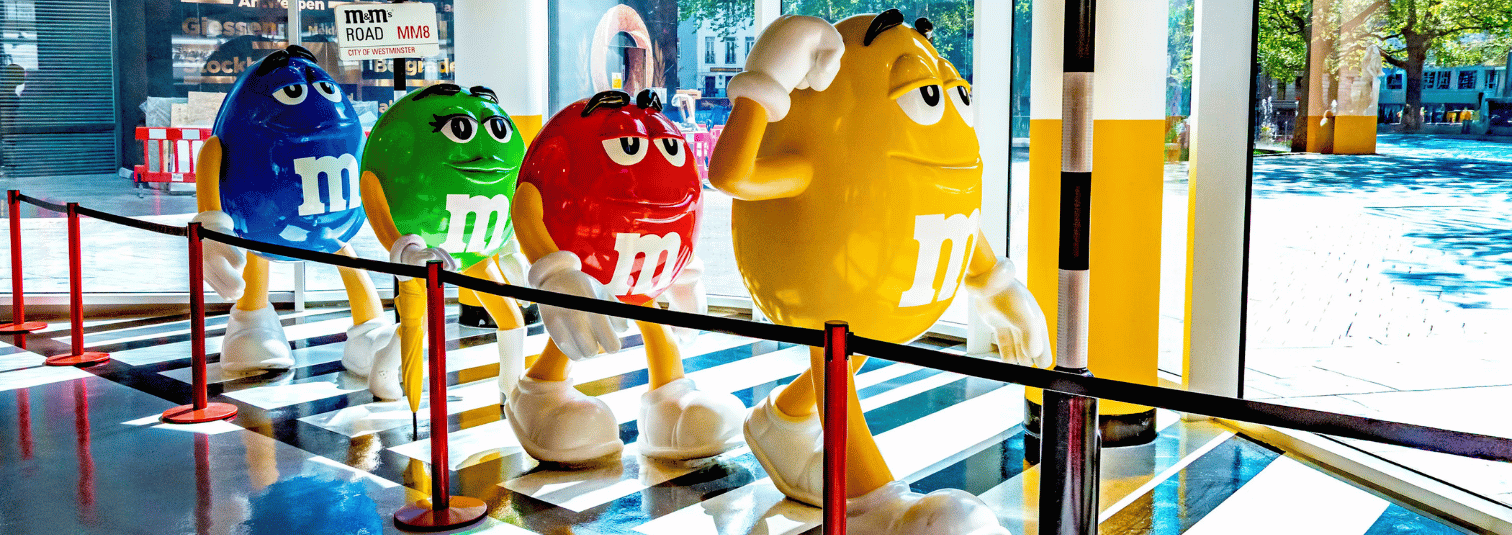
The latest ASA rulings have thrown a real curveball at brands that rely on distinctive characters in their advertising. M&M’s has found itself on the wrong side of the UK’s less healthy food (LHF) advertising regulations after the use of its iconic Yellow character was deemed to promote a specific product.
Interestingly, the advert also featured Green, but the ASA ruled that this cheerful chap did not depict an identifiable product. Yellow, on the other hand, was judged to represent Peanut M&M’s because his distinctive oval shape and colour combination are unique to that particular product.
Is the ruling harsh? Maybe.
Mars Wrigley certainly thinks so. The company argued that the M&M’s characters are “highly stylised” cartoons with human characteristics, designed to represent personalities rather than specific products or variants. The ASA wasn’t persuaded. The ruling means Yellow can no longer appear in UK online advertising or television advertising before the 9pm watershed.
It’s a fascinating decision because these characters have become far more than mascots over the years.
Red and Yellow have fronted M&M’s campaigns for more than three decades, building personalities that consumers recognise instantly. They’ve become brand assets in their own right, appearing across advertising, packaging, social media and experiential campaigns. Ask someone to describe Yellow and they’ll probably say he’s laid-back, optimistic and a little clueless before they mention chocolate.
That’s exactly what makes distinctive brand characters so valuable. They create familiarity, emotional connection and instant recognition without a product needing to take centre stage. Marketing textbooks are full of examples showing how memorable mascots help brands build long-term equity, often becoming as recognisable as a logo.
Ironically, that’s also what has created the problem here.
The stronger the association between a character and a specific less healthy product, the harder it becomes to argue that the character isn’t promoting that product.
It raises some interesting questions for other brands.
Should the Peperami Animal be feeling nervous? Does Percy Pig need to watch his back? What about Freddo Frog? Where exactly is the line between a brand mascot and a representation of a specific product?
At the moment, nobody can answer those questions with complete confidence.
As brands begin digesting the latest rulings, one thing is becoming increasingly clear: very little is straightforward in the evolving world of LHF advertising.
CAP guidance already recommends that colours, logos, characters and other distinctive brand cues should not combine in a way that identifies a specific less healthy product. That means we could see further rulings where no product is actually shown on screen, but the combination of familiar assets is still considered enough to promote it.
For brand owners, this is another reminder that compliance is becoming increasingly nuanced. It’s no longer just about whether a product appears in an advert. The wider creative execution, from characters and colours through to logos and other distinctive assets, can all influence how regulators interpret a campaign.
So how can brands protect themselves?
It’s still early days, and the industry is learning from each new ruling. But one thing is certain: marketers should be thinking beyond traditional advertising alone.
Promotional marketing offers brands a wide range of ways to engage consumers without relying solely on advertising campaigns. Prize promotions, on-pack activations, partnerships, loyalty programmes and reward campaigns can all create meaningful customer engagement while helping brands navigate an increasingly complex regulatory landscape.
At SPARK, we’re following every ASA ruling closely because each one provides another piece of the puzzle. Understanding where the boundaries are today helps brands build campaigns with confidence tomorrow.
One thing’s for sure: Yellow’s future may be a little less visible, but the conversation around brand characters and LHF advertising is only just getting started.

Which brands made the most of the 2026 FIFA World Cup? We look at YouGov’s latest data and how prize promotions helped sponsors turn attention into action.

Why is Gen Z returning to the cinema? SPARK CEO, David Pearson, looks at how digital fatigue, social connection and shared experiences are driving a new generation of moviegoers.

What do sunshine, rain and bad hair days have in common? Some of the smartest marketing campaigns ever created.