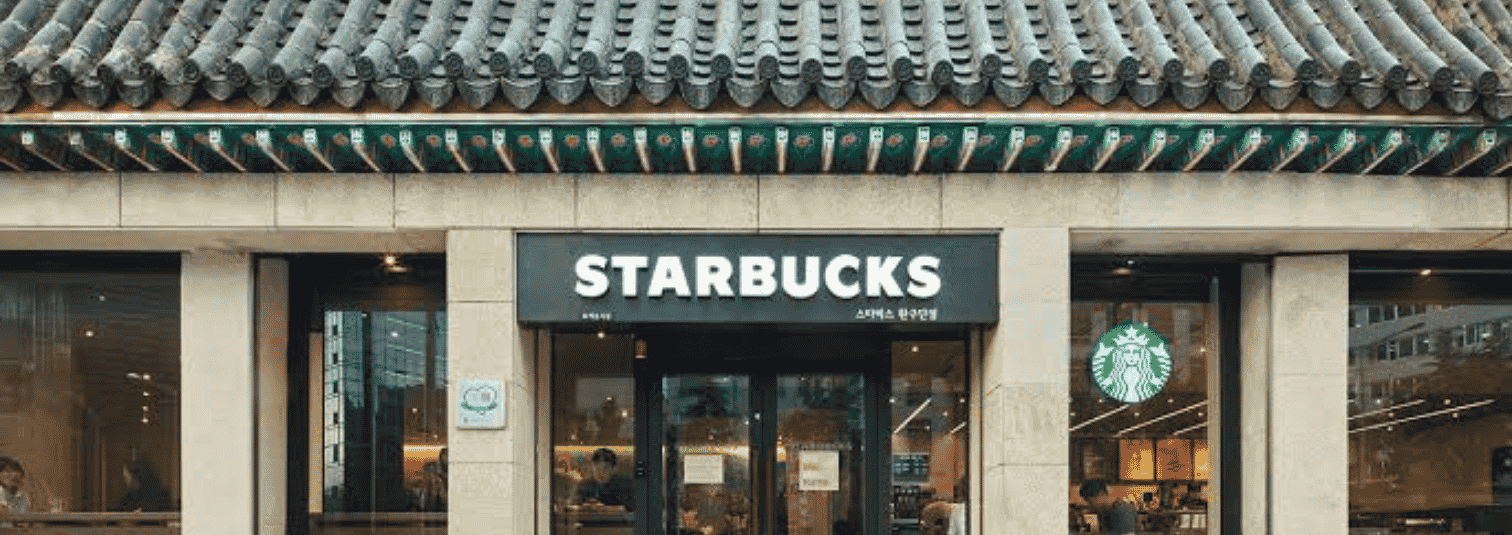
There is an ancient, unwritten rule in the marketing playbook that usually goes unsaid because it is so blindingly obvious: When launching a new product, try not to accidentally remind your entire customer base of a brutal, blood-soaked military dictatorship.
It’s a simple rule. A golden rule. Yet, somehow, the marketing team at Starbucks Korea—the third-largest market for the coffee giant globally—managed to take that rule, shred it, and blend it into what can only be described as a double-shot espresso of pure historical trauma.
Let’s set the scene. Imagine you are a bright-eyed corporate marketer. You have a new line of heavy-duty, stainless-steel travel tumblers to sell. They are rugged. They are tough. Naturally, you call them the “SS Tank” series. You look at the calendar for a good day to launch them. You see May 18th. “Perfect!” you think. “We’ll declare May 18th to be ‘Tank Day!’ It rhymes with absolutely nothing, but it sounds edgy!”
To spice things up, you write a catchy, high-impact slogan for the social media graphics: “Slam it on the desk with a thwack!” You high-five your colleagues, hit ‘publish,’ and wait for the praise—and the caffeine-fueled revenue—to roll in.
Instead, within hours, your sales have plummeted by over a quarter. Social media is flooded with videos of furious customers smashing your cups. The President of the country is on X calling you a “low-class peddler” who conducts “bottom-feeding behavior.” By lunch, your CEO has been fired. By nightfall, the billionaire chairman of your parent company is on national television bowing in an agony of corporate shame while the police open a criminal investigation against him.
Welcome to the great Starbucks “Tank Day” fiasco.
The Anatomy of a Perfect Storm
To understand why South Korea collectively spat out its iced Americanos in absolute horror, we have to look at what the organizers actually stumbled into. This wasn’t just a clumsy typo; it was a masterclass in hitting a nation’s most sensitive cultural tripwires simultaneously.
First, there was the date. May 18th is not just another Tuesday in South Korea. It is the anniversary of the 1980 Gwangju Uprising, a deeply sacred and painful historical milestone. On that exact day, the country’s military junta deployed actual paratroopers and heavy tanks to brutally crush pro-democracy student protesters, leaving hundreds dead. Coupling the date “5/18” with a cheerful invitation to celebrate “Tank Day” is the historical equivalent of a German bakery launching a “Firestorm Friday” discount on the anniversary of the bombing of Dresden. It is not just tone-deaf; it feels actively hostile.
But the creative team wasn’t done. They decided to double down with the slogan: “Slam it on the desk with a thwack!”
To a casual observer outside of Korea, it sounds like standard, aggressive copy designed to sell a durable cup. To anyone who lived through the late 1980s in South Korea, those words carried a sickening echo. In 1987, a student activist named Park Jong-chul was tortured to death by the regime’s police. In a notorious, widely mocked cover-up attempt, authorities claimed the boy hadn’t been harmed at all; rather, an officer had simply slammed his hand down on the desk with a “thwack,” causing the student to drop dead from sudden shock.
By pairing “Tank Day” on May 18th with a literal reference to a dictatorship torture cover-up, Starbucks didn’t just step over the line—they sprinted past it, built a drive-thru on the other side, and started charging extra for oat milk.
The Echo Chamber of “Edgy” Marketing
How does this happen? How does a multi-million-dollar marketing campaign pass through graphic designers, copywriters, brand managers, and regional directors without a single human being stopping to say, “Hey, guys, are we sure this doesn’t sound a bit… totalitarian?”
The answer lies in the toxic echo chamber of modern “disruptive” marketing. In the cutthroat attention economy, brands are utterly terrified of being boring. Creative teams are under immense pressure to create “meme-able” content that cuts through the digital noise. In that desperate scramble for virality, historical context is often treated as an annoying speed bump.
The subsequent internal investigation by parent company Shinsegae Group revealed that officials signed off on the campaign without even opening the final design files. There was no legal review, no socio-political screening, and evidently, not a single history book in the building. They saw a pun, they saw a date, and they pulled the trigger.
The corporate clean-up has been as unprecedented as the blunder itself. Firing the CEO on day one was just the opening act. The company took the truly jaw-dropping step of announcing it would close all 2,000+ stores nationwide early for half a day so that every single barista, manager, and corporate executive could sit through mandatory history and social sensitivity lectures led by university professors. Even the billionaire chairman has to sit in a separate room for remedial history lessons.
What We Can Learn From the Fiasco
If there is any dark comedy to be found here, it is the image of thousands of Starbucks employees being forced to lock the doors, turn off the espresso machines, and stare at a whiteboard learning about 20th-century geopolitical trauma because a few creatives in marketing wanted to sell a shiny cup.
But for businesses operating in global markets, the lessons are clear, sharp, and expensive:
Starbucks Korea will eventually recover, but it will take a very long time for the literal and metaphorical smoke to clear. Let this be a warning to brands everywhere: pay attention to history. Because if you don’t read the past, you might just find your corporate reputation slammed on the desk with a very definitive, very expensive thwack.
David Pearson
CEO