
Sales promotion vs discounting: SPARK CEO David Pearson shares what IPM Awards winners did to grow sales, win feature space and beat the discount.
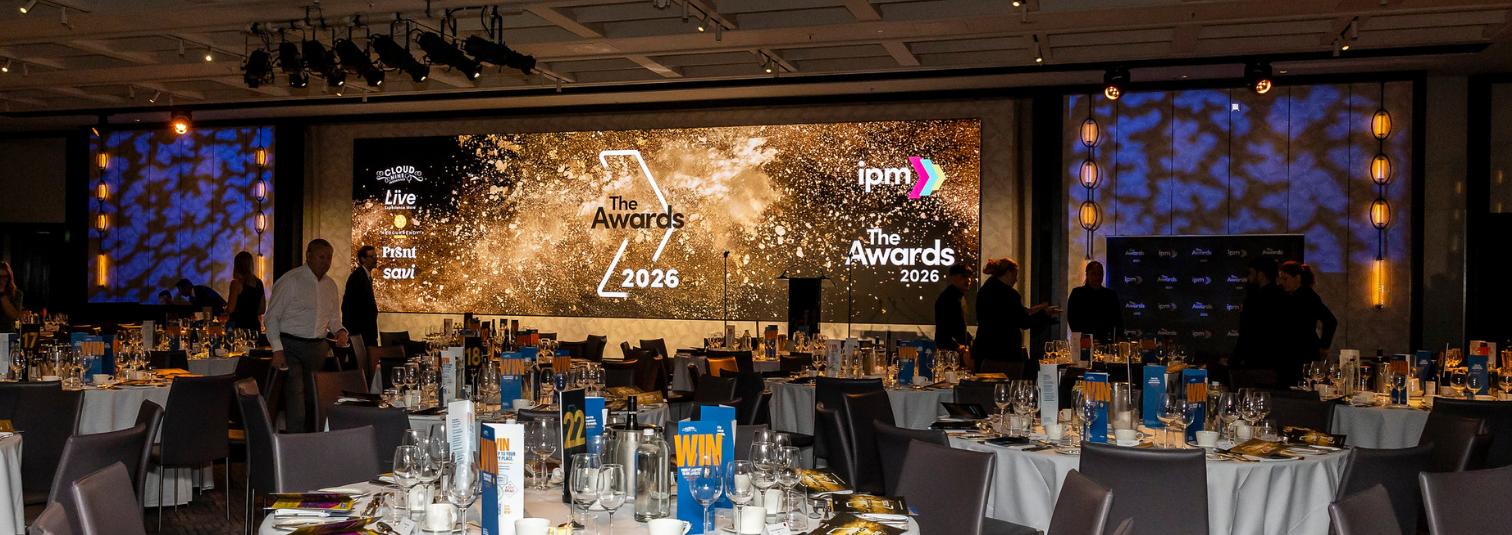
This year I once again had the privilege of chairing a judging panel at the IPM Awards. It’s one of the best seats in our industry: a day spent with the strongest sales promotion work in the country, and the people who made it happen.
What always strikes me about the campaign entries isn’t the creativity, although there was plenty of it. It was how familiar the problems were. The brands behind the winning entries were facing exactly what so many brands tell us they face today: falling share, crowded shelves, retailers asking for margin, and shoppers watching every penny.
Most of them could have reached for a price cut, but they didn’t. Instead, they used promotional marketing campaigns to give shoppers a reason to choose them, and the results speak for themselves.
If you’re weighing up sales promotion vs discounting, read on for some great insights from this years award-winning campaigns.
The best entries were clear, from the first page, about what they needed. Not “raise awareness” in the abstract, but specific commercial goals that any brand manager would recognise.
Some wanted to be seen, for example, one team’s ambition was simply to make the product unmissable. Others needed to secure feature space to drive visibility and penetration in a crowded category, and one specifically set out to unlock nationwide feature space without discounting at all.
Some needed new people through the door: recruiting younger shoppers or motivating trial from families, whilst others needed to win back lapsed shoppers. The common thread was getting people to see, try and buy.
All of them had to turn attention into sales. They wanted to grow sales value and volume, deliver measurable uplift across channels, drive repeat purchase, and win over retailers as well as shoppers. Above all, they needed a positive return on investment.
None of these brands chose between commercial results and brand building. They expected a promotion to bring the brand proposition to life and move product. The best ones did both, and did it in a way that felt authentic to the brand.
If your objectives look like this list, a price cut can tick some boxes for a few weeks but it rarely ticks them all.
The winning entries didn’t start from a position of strength. Reading them, I was struck by how candidly they described the problem.
One brand was in decline, losing share year on year to competitors with stronger physical presence. Another was up against dominant, established brands with big market share and bigger budgets. One had exceptional heritage, yet spontaneous awareness lagged well behind, and the brand felt increasingly distant from its audience. Several were in intensely saturated categories, fighting strong branded and own-label rivals for limited shelf space and shopper attention.
Then there’s the pressure every brand feels right now. The cost of living crisis is making shoppers more selective. Retailers routinely ask for margin support or temporary price reductions to secure feature. In many categories, deep discounting and NPD have become the default levers, and discount-led strategies have become commoditised.
But when everyone competes on price, a discount stops being a reason to choose you. It becomes the cost of being on the shelf, and it does nothing to build long-term emotional relevance with shoppers.
The winners found a different way in. Their insights were practical, not lofty:
Getting stand-out and changing habitual shopper behaviour is difficult. But none of these brands solved it by cutting the price.
Every year the results make the strongest case for choosing promotion over price cutting.
One campaign exceeded every commercial objective, delivering the brand’s highest incremental sales in four years, with no NPD and no deep price investment. Another reported double digit return on investment from its core on-pack promotion. One team described its campaign as the most successful added-value on-pack promotion it had ever run.
Across the winners, the same outcomes came up again and again: more customers, higher unit sales, increased category spend, KPI sales targets smashed. Redemption rates significantly outperformed typical on-pack benchmarks, and consumer participation exceeded expectations.
Crucially, the gains didn’t vanish when the promotion ended. Entries reported sustained weekly growth and sustained uplift after the promotional period. Shelf visibility increased significantly, and the brands strengthened their position in the category.
There was a longer-term prize too. Shoppers opted in to CRM, giving brands a direct relationship they can build on long after the campaign. A discount can’t give you that. It trains shoppers to wait for the next deal, and when the price goes back up, they often go back to what they bought before.
I often tell brands that a price cut gives shoppers a reason to buy now. A great promotion gives them a reason to buy you. It earns feature space on its merits, adds value rather than taking it away, and leaves your brand stronger when it ends.
None of the winners got there by accident. Each one paired a clear objective with an honest understanding of its situation, then built an idea simple enough for shoppers to join and strong enough for retailers to back. Behind every idea was the delivery: the legal compliance, the redemption mechanics, the prizes and the fulfilment that make a promotion run smoothly.
That’s what we do at SPARK. We help brands without an in-house promotions team turn a commercial challenge into an award-worthy campaign, from the first concept to the final prize delivered.
If you’re facing falling share, a crowded shelf or a retailer asking for another price reduction, let’s talk before you reach for the discount. Get in touch with the SPARK team to discuss your objectives, and we’ll show you what a well-built promotion could do for your brand.
